
KOI 2022 – 19th International Conference on Operational Research
Vom 28.09. bis zum 30.09.2022 findet die KOI 2022 in Šibenik, Croatia statt. Weitere Informationen finden Sie hier.
Vom 28.09. bis zum 30.09.2022 findet die KOI 2022 in Šibenik, Croatia statt. Weitere Informationen finden Sie hier.
Vom 27.09. bis zum 30.09.2022 findet die GPCO 2022 in Apolda statt. Weitere Informationen finden Sie hier.
von JOHANNA DUJESIEFKEN & GUIDO VOIGT
Nach zwei Jahren der COVID19-Pandemie fand die diesjährige Jahrestagung der Gesellschaft für Operations Research endlich wieder in Präsenz statt. Vom 6. bis 9. September 2022 wurden am Karlsruher Institut für Technologie (KIT) abwechslungsreiche, interessante, und anspruchsvolle Ideen und Beiträge insbesondere zu den Themen Energie, Information und Mobilität präsentiert.
Die über 625 Teilnehmern konnten aus einem Tagungsprogramm, welches über 425 Beiträge in 113 Sessions umfasste, wählen. Ergänzt wurde das Programm durch 3 spannende Plenar- und 9 Semiplenarvorträge, 4 Workshops und das Begleitprogramm Dokt!OR.
Am Dienstagnachmittag begann die Konferenz, speziell für die Nachwuchswuchswissenschaftler, mit dem Dokt!OR-Programm. Hier hielt Manuela Schnaubelt vom KIT einen Vortrag zum Thema „Slow down and gain time – an introduction to stress and time management for doctoral researchers“. In der anschließenden Panel-Diskussion konnten sich interessierte Doktorandinnen und Doktoranden über Karrierewege in der Wissenschaft informieren. Für Fragen standen Prof. Dr. Christina Büsing (RWTH Aachen), Dr. sc. ETH Stephan Bütikofer (ZHAW Zurich University of Applied Sciences) und Dr.-Ing. Uta Mohring (KIT) zur Verfügung. Der Moderator Christian Füllner (KIT) führte durch die Veranstaltung. Beim abschließenden Get-Together im Mathematik-Gebäude 20.30 bestand die Möglichkeit, bei kühlen Getränken und leckeren Häppchen neue Kontakte in der Wissenschaft zu knüpfen oder bisherige Kontakte zu anderen Wissenschaftlern zu vertiefen.
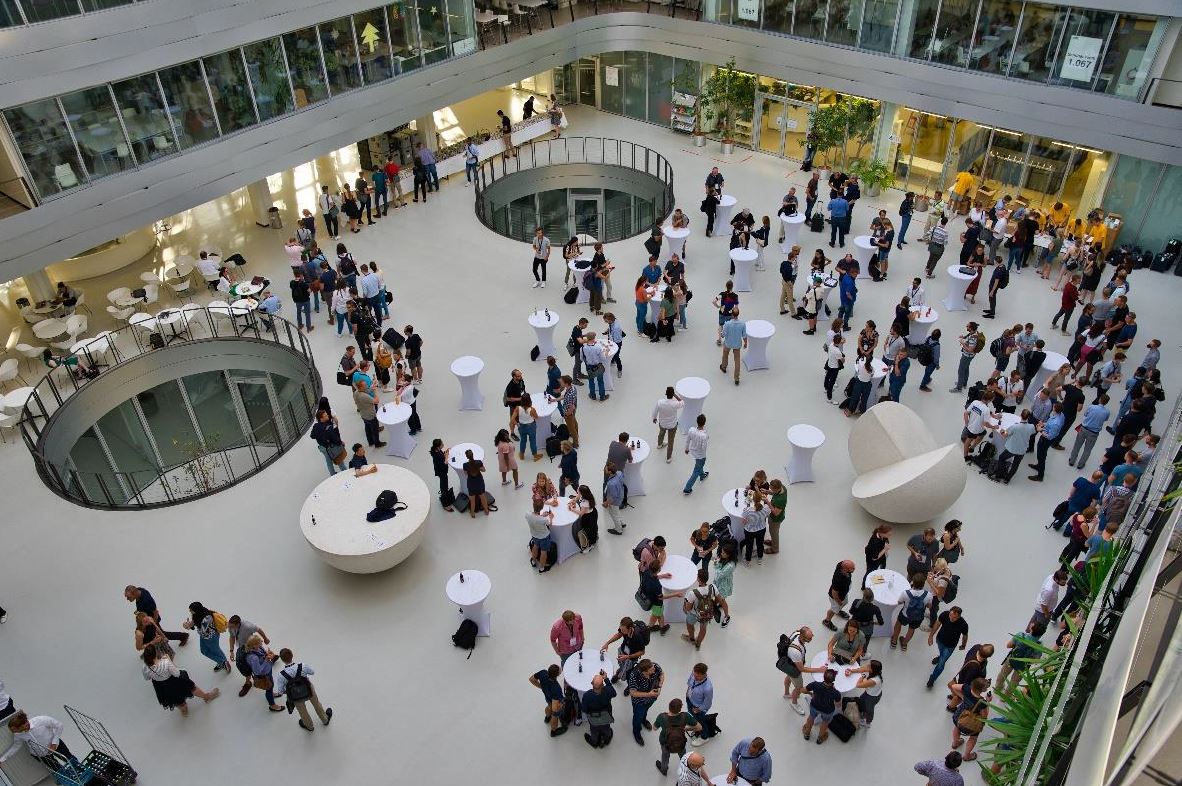
Am Mittwoch wurde das wissenschaftliche Programm von Prof. Dr. Stefan Nickel und einer Video-Begrüßung von Prof. Dr. Steffen Rebennack eröffnet. Anschließend stellte Prof. Dr. Michael Decker das KIT, die Forschungsuniversität in der Helmholtz-Gemeinschaft, und Prof. Dr. Alf Kimms die Gesellschaft für Operations Research vor. Außerdem wurden vier Preise verliehen.
Für den GOR Master Thesis Award, gefördert von der GAMS Software GmbH, wählte die Auswahlkommission unter Leitung von Kevin Tierney die folgenden Arbeiten aus:
Nicht weniger schwierig war die Auswahl der Preisträger des GOR-Dissertationspreises, den die Gurobi Optimization GmbH finanziell unterstützte. Die Auswahlkommission unter Leitung von Peter Letmathe wählte die folgenden Arbeiten aus:
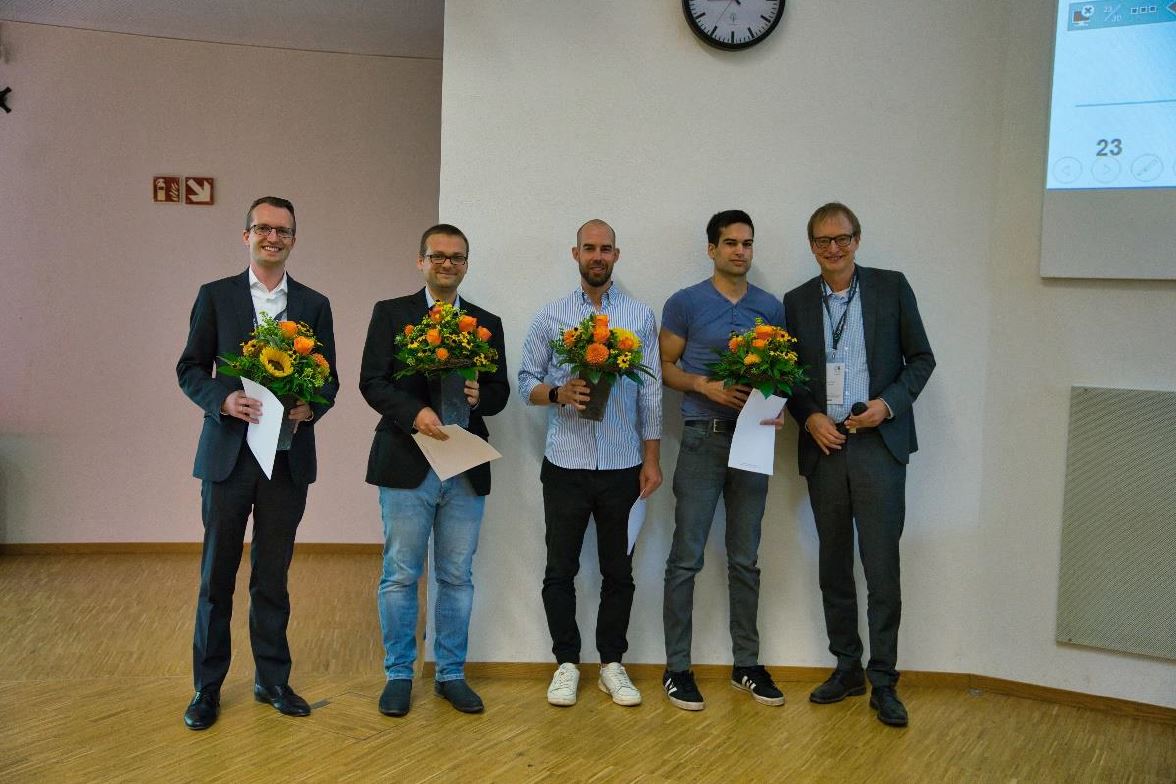
Für den GOR Young Researcher Award, der vom Fraunhofer IWTM gesponsert wurde, wählte die Auswahlkommission unter Leitung von Alexander Martin die folgenden Forscher aus:
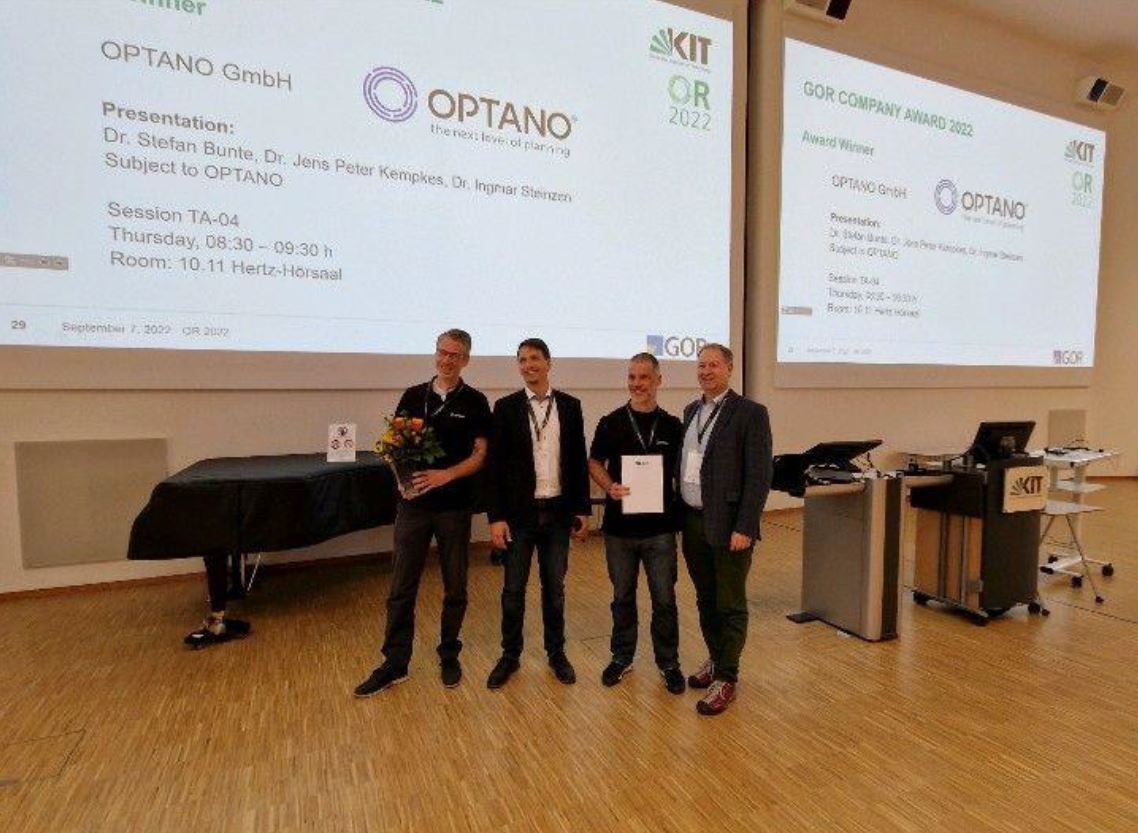
Den GOR Company Award erhielten die Gründer der Optano GmbH, Dr. Stefan Bunte, Dr. Jens-Peter Kempkes und Dr. Ingmar Steinzen. Im Namen der Auswahlkommission übergab Dr. Jens Schulz (FICO) den Preis.
Anschließend hielt Prof. Dr. Maria Grazia Speranza (University of Brescia, Italien) einen inspirierenden Vortrag über die „Optimization in transportation & logistics: yesterday, today, tomorrow“. In einem spannenden Bogen über die Entstehung und Entwicklung des Gebiets des Operations Research zeigte sie zukunftsweisende Anwendungsgebiete des Operations Research auf. Den zweiten Plenarvortrag mit dem Titel „Sensing Applications as a Driver for Edge-AI Solutions“ hielt PD Dr. Victor Pankratius (Bosch Sensortec) im Laufe des Donnerstags. Der Vortrag zeigte viele Anwendungsfälle, in denen Sensoranwendungen zu einem wichtigen Treiber für künstliche Intelligenz im Ultra-Low-Power-Kontext werden. Weiterhin wurde auf die Bedeutung der Formalisierung und Einbeziehung von Fachwissen in das maschinelle Lernen eingegangen, das Optimierungspotentiale wie z. B. die Verringerung des Speicherbedarfs schafft. Den dritten Plenarvortrag mit dem Titel Lessons for OR from the Covid-19-Pandemic hielt Prof. John R. Birge (University of Chicago, USA) im Rahmen der Abschlussveranstaltung am Freitag. Basierend auf den Lehren der Covid-19-Pandemie adressiert dieser Vortrag neue Forschungsherausforderungen und die Rolle von Operations Research bei der Behandlung von globalen politischen Fragen.
Auch in den neun Semiplenarvorträgen spiegelt sich die Vielfalt des Operations Research wider. Am Mittwoch standen folgende Semiplenarvorträge auf dem Programm:
Am Donnerstag umfassten die Semiplenarvorträge:
Am Freitag fanden sich im Programm die folgenden Semiplenarvorträge:
Nach der GOR-Mitgliederveranstaltung fand am Donnerstagabend das Konferenzdinner im Lichthof der BGV Badische Versicherungen statt. In angenehmer Atmosphäre konnten beim Sektempfang und dem anschließenden exquisiten Buffet neue Kontakte geknüpft und bestehende Kontakte vertieft werden.
Stellvertretend für alle Konferenzteilnehmer bedanken wir uns bei den Verantwortlichen, insbesondere Prof. Dr. Steffen Rebennack, Prof. Dr. Stefan Nickel und Dr. Marcel Sinske, für das gut gestaltete Tagungsprogramm sowie dem gesamten Organisationsteam vor Ort für die ausgezeichnete und reibungslose Organisation. Wir freuen uns auf ebenso schöne Konferenztage bei der OR 2023 in Hamburg! (https://www.or2023.uni-hamburg.de)
Autorin: Elisabeth Gaar
Viele mathematische Optimierungsproblem sind auf so genannten Graphen definiert. Diese haben Knoten (die man sich als Punkte vorstellen kann) und Kanten (die man sich als Striche vorstellen kann), die je zwei dieser Knoten miteinander verbinden. Eines der fundamentalsten Optimierungsproblemen auf Graphen ist es, die Stabilitätszahl eines Graphen zu bestimmen. Dabei handelt es sich um die größte Anzahl von Knoten des Graphen, so dass je zwei dieser Knoten nicht miteinander durch eine Kante verbunden sind. Leider ist es ein (NP-) schweres Problem, die Stabilitätszahl eines Graphen zu bestimmen. Aufgrund der zahlreichen Anwendungen, zum Beispiel in der Molekularbiologie oder bei Terminplanungsproblemen, hat man aber trotzdem ein großes Interesse daran, die Stabilitätszahl von Graphen genau zu bestimmen.
Elisabeth Gaar, Melanie Siebenhofer und Angelika Wiegele haben sich im Artikel „An SDP-based approach for computing the stability number of a graph“, der 2022 im Journal Mathematical Methods of Operations Research publiziert wurde, damit beschäftigt, die Stabilitätszahl von Graphen zu berechnen. Dabei haben sie sich eines weit verbreiteten Lösungsansatzes (einem so genannten Branch-and-Bound-Verfahren) bedient, für dessen Umsetzung man gute Schranken an die Stabilitätszahl braucht. Die Autorinnen haben diese Schranken mit Hilfe eines Semidefiniten Programms erhalten, das bereits 1979 von Lovasz eingeführt wurde, und für das kürzlich von Elisabeth Gaar und Franz Rendl weitere Verbesserungen vorgeschlagen wurden. In dieser Publikation wurden einerseits erstmals die existierenden Schranken für die gesamte Berechnung der Stabilitätszahl verwendet. Andererseits haben die Autorinnen zwei Wege vorgeschlagen, um diese existierenden Schranken deutlich schneller zu berechnen, ohne dabei einen großen Qualitätsverlust in Kauf nehmen zu müssen. Einer der Wege basiert auf der Kenntnis der Facetten des zugrundeliegenden Polytops, der andere auf separierenden Hyperebenen. Dadurch ist es den Autorinnen möglich, den Speicherbedarf für die Berechnung der Stabilitätszahl klein zu halten, und dabei die Zeit für die Berechnung deutlich zu verringern.
Den ganzen Artikel aus Mathematical Methods of Operations Research findet man frei zugänglich unter https://link.springer.com/article/10.1007/s00186-022-00773-1.
Vom 30.08. bis zum 02.09.2022 findet die ODS 2022 in Florenz, Italien statt. Weitere Informationen finden Sie hier.